

The Fosway 9-Grid™ Trajectory Guide
9-
The Fosway 9-Grid™ allows you to compare different solutions based on their Performance, Potential, Market Presence, Total Cost of Ownership and Trajectories across the market.
This page provides information on how Trajectory is rated and how to interpret it. For a more comprehensive introduction to the Fosway 9-Grid™, see the 9-Grid™ Introduction page.
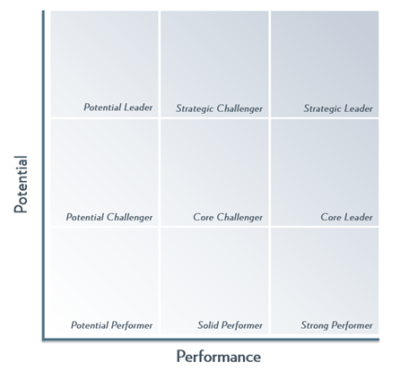
9-Grid™ Trajectory explained
For each 9-Grid™, Trajectory is Fosway’s sense of the rate of change of a vendor solution in terms of both Performance and Potential. Trajectory is an assessment of the rate of change (or acceleration or deceleration) of the vendor/solution and is relative to their performance and potential previously, as well as relative to the level of change in the wider supplier market.
Trajectory is rated relative to the vendor themselves and the market as a whole, NOT against the other vendors in that Zone. Vendors with an accelerating performance relative to themselves and relative to the whole market will show a right-side trajectory.
Vendors maintaining their relative growth or performance but not accelerating further will show middle trajectory, and those with decelerating growth or advocacy will show a left-side trajectory. It is similar for Potential, too.
In a 9-Grid™, Trajectory is the combination of those two considerations – the delta or rate of change of performance and the rate of change of potential. This gets mapped into one of nine positions of the vendor within the Zone.
Trajectory Description Examples

Although we talk about Trajectory as one of the dimensions of the 9-Grid™, it is actually itself two-dimensional as it reflects the relative change in both Performance and Potential. To simplify understanding and communication of the Trajectory rating we have now introduced nine Trajectory labels and created descriptions for each of the labels, so each Trajectory can be referenced by its level.
For example, if a vendor is shown as mid-right in a Zone, that implies a relative increasing rate of performance and stable rate of growth in potential – relative to itself and the market as a whole. We call this position an “Accelerating” Trajectory, showing it further improving its market and customer performance, whilst at the same time continuing to demonstrate similar potential in the market
Remember: Trajectory is rated relative to the vendor themselves, not relative to other solutions in the same zone.
Similarly, a vendor that has a stable performance but a slowing of potential relative to itself and the whole market would be defined as a ‘Consolidating’ Trajectory. This would be visualised as follows.
The following table describes each of the Trajectory positions, showing the position of that Trajectory within the Zone, its Trajectory label and a summary description of how to interpret the Trajectory.
Hover over the tiles for more information about each position.


Vendors with an Evolving trajectory rating are increasing their level of innovation and potential to serve enterprise customers more effectively, but have slowing market performance or customer advocacy.

Vendors with an Expanding trajectory rating are increasing their level of innovation and potential to serve enterprise customers more effectively and are maintaining their level of market performance and customer advocacy.

Vendors with an Excelling trajectory rating are increasing their level of innovation and potential to serve enterprise customers effectively and are raising their level of market performance and customer advocacy.

Vendors with a Moderating trajectory rating are maintaining their level of innovation and potential to serve enterprise customers effectively but have slowing market performance and/or customer advocacy.

Vendors with a Maintaining trajectory rating are maintaining their level of innovation and potential to serve enterprise customers as well as their market performance and customer advocacy.
Vendors with an Accelerating trajectory rating are maintaining their level of innovation and potential to serve enterprise customers effectively whilst also raising their market performance and customer advocacy.

Vendors with a Realigning trajectory rating are decelerating their level of innovation relative to previously and the wider market at this level, thus reducing the velocity at which they expand the scope and sophistication of their solution, and have slowing market growth or customer advocacy.
Vendors with a Consolidating trajectory rating are maintaining their market performance and customer advocacy, but have a slower level of innovation relative to previously or the wider market at this level.

Vendors with a Capitalising trajectory rating are increasing their level of market performance and customer advocacy but have a slower level of innovation relative to previously and the wider market at this level.
HOW WE CAN HELP YOU
Why start your procurement process from scratch when we already have the research and insight to help you make better supplier decisions much faster? We can give you the inside track into any potential suppliers you are thinking of working with, as well as input into your HR, talent and learning strategy and projects.

It’s so important to all the thousands of buyers based in the UK, EMEA and internationally to have access to independent analysis that accurately reflects their market. Most of the other research models that exist are US-centric and therefore provide very little real value to organisations seeking to make the best decision about which learning and talent system to invest in
 English (UK)
  Deutsch
  Français