


Digital Learning Realities Research 2025: Ecosystem Trends
Fosway Group, Europe’s #1 HR industry analyst, has announced the key takeaways for organisations from its annual Digital Learning Realities research, in association with Learning Technologies, the global leader in workplace learning tech events. This last section looks at Ecosystem Trends.
Now in its landmark 11th year, the research explores how L&D teams are tackling the challenges of a business environment and tech landscape that is in a constant state of flux.
It’s clear: a sea change has happened in learning. We have truly entered the age of skills-centred learning strategy, as organisations begin to assess just how fit they are for the future, and plan to build the capabilities that maintain organisational competitiveness at a time of huge upheaval and radical innovation. Our research gives critical insight into what L&D leaders need to navigate the realities of digital learning in 2025 and beyond.
Fosway Group’s signature infographics are part of a seven-part series for this research cycle, and the much anticipated results of this year’s survey can be found below.
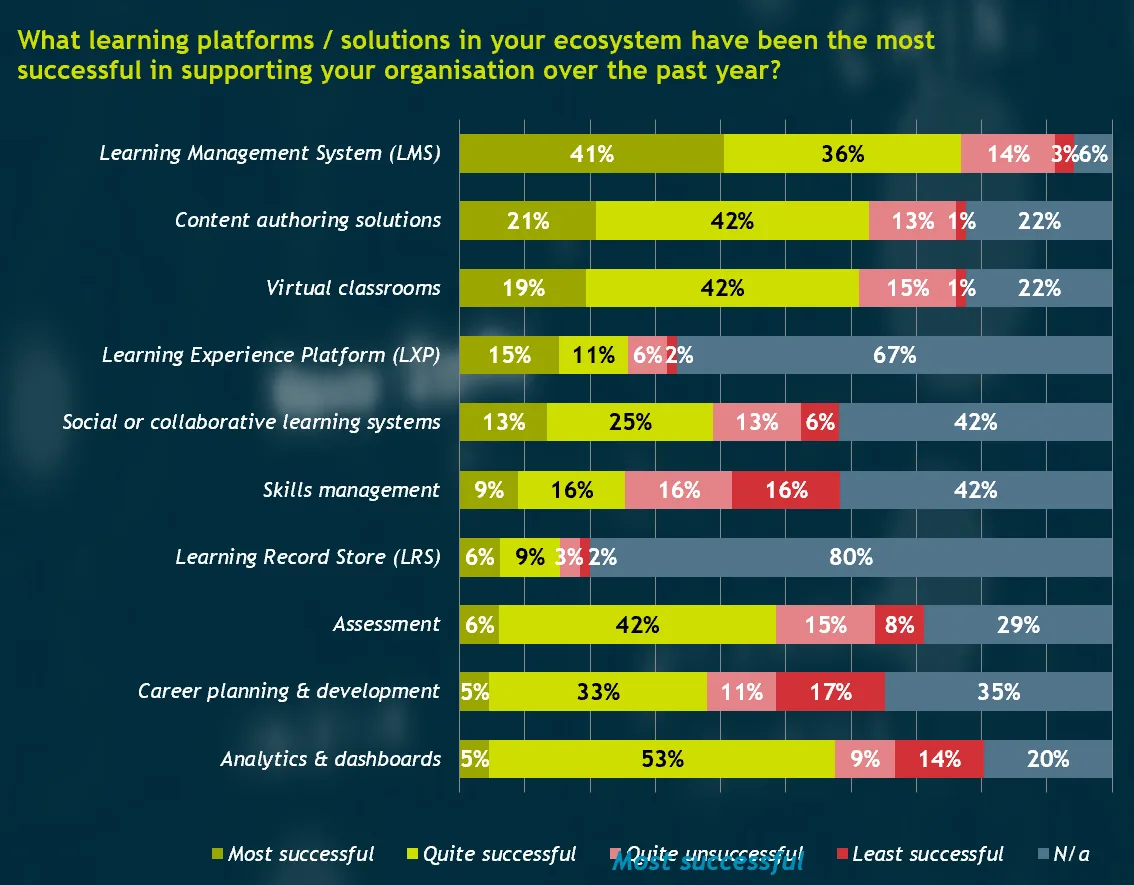
Ecosystem Trends
Best of breed Learning Systems dominate a stagnant learning technology landscape.
The investment of Cloud HR providers over the past decade doesn’t seem to have made a significant impact on organisations’ learning platform ecosystem. Only 12% of organisations are using the learning module in their HR or HCM solution.
As the world continues to accelerate change, the picture from this year’s Digital Learning Realities research shows just how challenging this year has been for L&D teams. Spend is static at best, headcount is under pressure, and resources are stretched. Innovations in content development, the pivotal nature of people insights in defining next gen learning, the skills transformation agenda, the need to scale and optimise learning teams and evidence learning value are all creating a perfect storm.
“But it’s a tempest which only one in three thinks they are skilled enough to navigate. It’s going to be a hairy ride. Equally, it’s not a time to question the role of learning teams. The plain truth is, their role is secure if they can bridge the skills gaps they’ve identified and we’ve captured in our report.
 English (UK)
  Deutsch
  Français