

Franchisee training: Consistency within complexity, post-pandemic
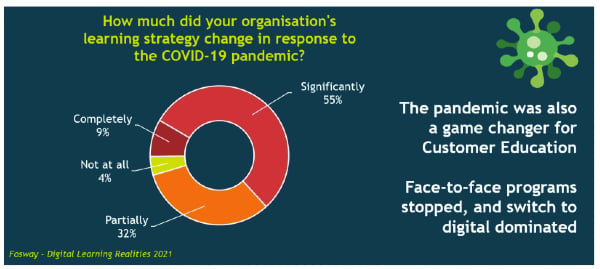
Over recent years Fosway has been tracking the massive increase in the use of learning technologies because of the global pandemic. One area where this has had a big impact is Extended Enterprise Learning – the education and training of external stakeholders such as customers and partners, which was traditionally delivered in the classroom by trainers often travelling the world. One subset of this group of learners are in the franchise market which has some very specific and complex requirements.
Extended enterprise learning (EEL) is learning provided to an external audience – to people who are not employees. This external audience could be customers, partner organisations, customers of partner supply chains, franchise workers, members of institutions, contractors and/or contingent workers, for example.
Typically, EEL educates external people on how to use or sell a product or service. It’s not a new phenomenon – car manufacturers have trained car dealerships to support sales for years, just as hotel and restaurant chains have provided training for their franchises and medical equipment manufacturers have trained medical professionals to use their equipment. Tech companies are big proponents of extended enterprise learning, with their external learning audience usually being much larger than their internal learning audience.
Our latest research papers:
Coming soon…
 English (UK)
  Deutsch
  Français